PANASONIC MHDA153A1A Ac Servo Driver Box 1PC
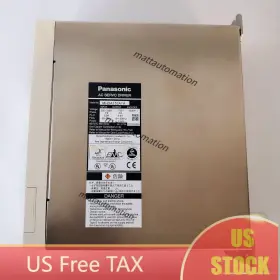
( Brand: Panasonic ), ( Country/region Of Manufacture: United States ), ( Type: Servo Drive ), ( Manufacturer Part Number: MHDA153A1A )
Review PANASONIC 1pc New Ac Servo Driver In Box Expedited Shipping
The Panasonic MHDA153A1A AC Servo Driver is a versatile and high-performance component designed for various automation applications. This servo driver is engineered to deliver precise control and efficient power management for motors, making it an ideal solution for machinery, machinery control systems, and robotics.
The MHDA153A1A is a 1-phase, 3-quadrant AC servo driver that supports current control and velocity control modes. It can handle a motor current up to 15 A and a voltage up to 240 V. The driver features an input frequency range of 15 to 200 Hz and a resolution of 0.125 degrees.
This servo driver is equipped with various protective functions, such as overcurrent protection, overvoltage protection, and overheat protection, ensuring the safety of the system and the motor. The driver also supports regenerative energy and can be connected to a DC bus for energy recovery.
The MHDA153A1A comes with an easy-to-use interface, which includes a 16-bit resolution encoder input, a serial communication interface, and a digital input/output port. It also features an adjustable gain amplifier, which allows users to fine-tune motor control parameters.
The driver is designed for easy installation and integration into automation systems. It comes with a compact and rugged design, making it suitable for industrial environments. The driver is also RoHS compliant and has a wide operating temperature range of -10 to 50 degrees Celsius.
Overall, the Panasonic MHDA153A1A AC Servo Driver is a reliable and efficient solution for precise motor control applications in various industries, including manufacturing, robotics, and automation. Its advanced features, protective functions, and user-friendly interface make it a popular choice for automation system designers and integrators.
The Panasonic MHDA153A1A AC Servo Driver is a versatile and high-performance component used in various automation applications. Here are some pros and cons that can help you make an informed decision about purchasing this servo driver:
Pros:1. High Torque and Speed: This servo driver can deliver a maximum torque of 15 Nm and a maximum speed of 6000 rpm, making it suitable for heavy-duty applications.
2. Wide Voltage Range: The servo driver can operate on a wide range of AC voltages from 90V to 480V, making it a flexible choice for various industrial applications.
3. High Precision: The Panasonic MHDA153A1A offers high precision positioning with a resolution of 0.01 degrees and a repeatability of 0.05 degrees.
4. Built-in Protection: This servo driver comes with built-in protection features such as overcurrent, overvoltage, and overheat protection, ensuring safe operation.
5. Programmable: The servo driver is programmable using Panasonic's Servo Programmer software, allowing users to customize various parameters to meet their specific application requirements.
Cons:1. Complex Setup: The servo driver may require a complex setup process, including wiring, parameter configuration, and software programming.
2. High Cost: Compared to lower-end servo drivers, the Panasonic MHDA153A1A is relatively expensive due to its high performance and features.
3. Large Size: The servo driver is quite large, measuring 165mm (W) x 111mm (D) x 55mm (H), which may limit its use in space-constrained applications.
In conclusion, the Panasonic MHDA153A1A AC Servo Driver offers high torque, wide voltage range, high precision, built-in protection, and programmability, making it a suitable choice for heavy-duty industrial applications where precise and reliable motion control is essential. However, its complex setup process, high cost, and large size may be drawbacks for some users.
If you require a servo driver for a heavy-duty application and precision motion control is a priority, then the Panasonic MHDA153A1A may be a worthwhile investment. However, if you are working in a space-constrained environment or have a smaller budget, you may want to consider a lower-end servo driver with fewer features and a simpler setup process. Ultimately, the decision depends on your specific application requirements and budget.
Details:
part #: mhda153a1a prices
- $514.33-$526.31
specifications carectronic:
- brand: Panasonic
- country/region of manufacture: United States
- type: Servo Drive
- manufacturer part number: MHDA153A1A
seller carectronic:
- city: Houston,Texas
- # reviews: 22
- rating: 100.0%
returns carectronic:
- policy: Returns Accepted
- method: Money back
- time: 30 Days
- paid by: Seller
shipping carectronic:
- class: Standard
- transit: 5-10 Days
- type: Fixed
- service: Standard
- cost: $0.00
payments carectronic:
- other
- credit card: Visa
- wallet: Paypal
offer carectronic:
- best offers: True
- quantity: 2
- options: Ship-to-home
- started: June 4, 2025
- availability: In Stock
- sold: 0
general carectronic:
- Vehicle Electronics GPS > Car Electronics Accessories > Other Car Electronics Accs
- condition: New
Panasonic MHDA153A1A Is Similar To:
- Panasonic Msma012a995 100 New Ac Servo Motor In Box Expedited Ship 1pcs (76.1% similar) Part #: Panasonic MSMA012A995 for sale...(June 4th, 2025)
- Panasonic Mbddt2210l01 New Ac Servo Driver (60.7% similar) Part #: Panasonic MBDDT2210L01 for sale...(June 4th, 2025)
- Panasonic Msma042a1f 1pcs New In Box For Ac Servo Motor Free Expedited Shipping (69.8% similar) Part #: Panasonic MSMA042A1F for sale...(June 4th, 2025)
- Panasonic Msma022p1f Ac Servo Motor New Original Free Expedited Shipping (63.4% similar) Panasonic ac servo motor MSMA022P1F new original free expedited shipping...(June 4th, 2025)
- Panasonic Mhmj022g1d Servo Motor 1pc New Expedited Shipping (62% similar) Part #: Panasonic MHMJ022G1D for sale...(June 4th, 2025)
- Panasonic Msm041a1a Ac Servo Motor 1pc New In Box Expedited Shipping (76.8% similar) Panasonic MSM041A1A ac servo motor 1PC new in box expedited shipping...(June 4th, 2025)
- Panasonic Msm012a1d One New In Box Ac Servo Motor (50.4% similar) Part #: Panasonic MSM012A1D for sale...(June 4th, 2025)
- Panasonic Mddht3530b01 Ac Servo Driver 200v Removed From The Working Machine (56.2% similar) Part #: Panasonic MDDHT3530B01 for sale...(June 4th, 2025)
- Panasonic Msma012s1a One Ac Servo Motor New (53.1% similar) One Panasonic ac servo motor MSMA012S1A new...(June 5th, 2025)
- Panasonic Msma012a1h 1pc New Ac Servo Motor Expedited Shipping (77.3% similar) 1PC new Panasonic MSMA012A1H ac servo motor expedited shipping...(June 5th, 2025)

5 offers $514.33–$526.31 USD
- New. Offer #1 priced at $526.31 + $0.00 delivery = $526.31* total. FREE SHIPPING
- New. Offer #2 priced at $514.33 + $0.00 delivery = $514.33* total. Can we get a wholesale price ?.FREE SHIPPING
- New. Offer #3 priced at $525.81 + $0.00 delivery = $525.81* total. FREE SHIPPING
- New. Offer #4 priced at $516.12 + $0.00 delivery = $516.12* total. FREE SHIPPING
- New. Offer #5 priced at $515.46 + $0.00 delivery = $515.46* total. FREE SHIPPING